
Space Summit 2025
Welcome to the Summit 2025! Join us at the MITRE Corporation on June 25th and 26th for a deep dive into Space, Air and Missile Defense for high priority needs. This in-person event brings together experts in the field to discuss the latest trends, challenges, and solutions in achieving defense of the homeland throughout all phases of military operations. Don't miss this opportunity to network, learn, and collaborate with government, industry leaders, and innovators.
Agenda (subject to changes)
Wednesday, June 25, 2025- Challenges, Technologies and Plans (SECRET CLEARANCE)
7:00 AM-8:00 AM
Registration and Check- In (Continental Breakfast)
8:00 AM-8:15 AM
Facilities Brief
(MITRE: Mr. Bruce Travers)
8:15 AM-8:30 AM
Summit Welcome and Summit Overview
(AOC: Mr. Nino Amoroso, President, Patriots' Roost Chapter)
8:30 AM-8:45 AM
National and International Efforts
(AOC: Mr. Tony Lisuzzo, President)
8:45 AM-9:15 AM
Welcome and Summit Overview
(MITRE: Ms. Katie Schroth, Vice President, Air and Space Forces Center)
9:15 AM-9:45 AM
Keynote: Ensuring a Resilient Cyber Domain for Effective Operations
(CSS: Maj. Gen. Matteo Martemucci, Deputy Chief)
9:45 AM-10:15 AM
Keynote: Integrating AI into C2 Battle Management of the Future
(LOCKHEED MARTIN: Dr. Mark T. Maybury, Vice President, Commercialization, Technology & Strategic Innovation)
10:15 AM-10:45 AM
Break
10:45 AM-11:30 AM
Ensuring Space Resiliency: Space Aggressor Spectrum Warfare Test & Training
(AFRL: Mr. Michael Buttram, Information Systems Laboratory)
11:30 AM-12:30 PM
Lunch
12:30 PM-2:00 PM
Panel: AF Information Dominance- MIT/LL FFRDC; NC3, Electronic Systems, Cyber and Networks PEOs
(Dr. Katherine Rink, Mr. Chris Dowd, Ms. Lea Kirkwood, Mr. David Adameck)
Moderated by Ms. Alexis Presti, Carnegie Mellon Software Engineering Institute, and Ms. Debra Zides, MITRE
2:00 PM-2:30 PM
Break
2:30 PM-4:00 PM
Panel: Industry Challenges and Opportunities: CMU SEI, Leidos, IS4S, Ansys
(Dr. Mark Sherman, Ms. Priya Kohler, Mr. Dan Crouch, Ms. JamieLynn Shepherd)
Moderated by Dr. Shawana Johnson, Global Marketing Insights, President
4:00 PM-6:00 PM
Reception hosted by Rohde & Schwarz
Thursday, June 26, 2025- Space and Missile Defense Operations (TS/SCI CLEARANCE)
7:00 AM-8:00 AM
Check-in and Breakfast
8:00 AM-8:30 AM
Welcome and Session Overview
(MITRE: Ms. Krystin Baker, Senior Principal Systems Engineer)
8:30 AM-9:15 AM
Keynote: Space ISR Operations
(Joint Staff J:32: Brig. Gen. Shannon O'Harren, Deputy Director, Operational ISR)
9:15 AM-10:00 AM
Real World Events Overviews
(Capt. Daniel Brewster)
10:00 AM-10:30 AM
Break
10:30 AM-11:30 AM
Keynote: NC3 Agility and Interoperability to Address New Capability Requirements
(AFNWC: Mr. Scott Hardiman, AF PEO for Nuclear C3)
11:30 AM-12:30 PM
Lunch
12:30 PM-1:30 PM
Hypersonic Missile Defense
(MITRE: Dr. Beverly A. Stark-Kublin, Hypersonic Defense Mission Outcome Lead)
1:30 PM-2:30 PM
Keynote: Emerging pLEO Missions and Capabilities
(SDA: Mr. Benjamin Michels, Chief Warfighter Integration Cell)
2:30 PM-3:15 PM
Break
3:15 PM-4:00 PM
Analysis of Multi-Domain Operations
(AFRL: Mr. Ryan Bone, Spectrum Warfare System Engineering branch)
4:00 PM-4:45 PM
Electronic Attack Threats to Space Systems
(MITRE: Jason Styslinger, Group Leader and Project Leader, Weapons Systems Department)
Thursday, June 26, 2025- Rohde & Schwarz/MITRE Seminar/Webinar (UNCLASSIFIED)
7:00 AM-8:00 AM
Check-in and Breakfast (Hosted by Rohde & Schwarz)
8:00 AM-9:00 AM
More than Space - a Resilient Core National PNT Architecture Benefits Everyone
(Dana A. Goward is President of the Resilient Navigation and Timing
Foundation)
9:00 AM-10:00 AM
Trends Overview for Satellite Measurements
Matt Hammond, Rohde & Schwarz)
10:00 AM-10:30 AM
Break
10:30 AM-11:30 AM
An Overview of Space Electronic Warfare (EW)
(Bill Kardine, Rohde & Schwarz)
Speaker Bios
Additional speaker bios coming soon....
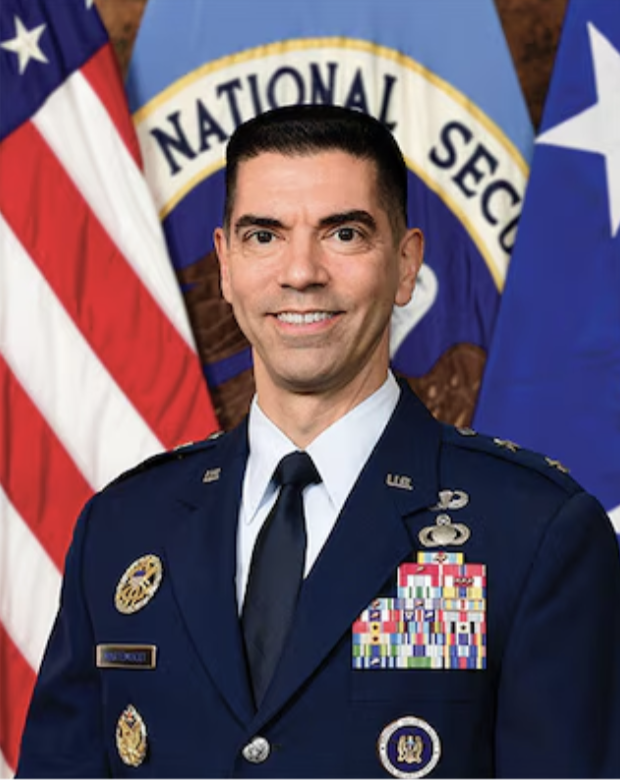
Maj. Gen. Matteo Martemucci is the Deputy Chief, Central Security Service, National Security Agency, Fort George G. Meade, Maryland. He assists the Chief, Central Security Service, who also serves as the Commander, U.S. Cyber Command, and Director, National Security Agency, with operational control of signals intelligence missions conducted by all military services and the Coast Guard, comprising more than 16,600 personnel.
Maj. Gen. Martemucci commissioned in 1994 as a graduate of Penn State University. He is a career intelligence officer and Cyberspace Operator. He has commanded at the squadron, group and wing levels, and has served on staff assignments with the Air Staff, Joint Staff and Office of the Secretary of Defense. Additionally, he has served in special operations (Airborne), combat search and rescue, fighter aircraft and signals intelligence units. He has deployed in support of operations Decisive Endeavor, Southern Watch, Iraqi Freedom, Enduring Freedom and Inherent Resolve. A fully qualified European foreign area officer, he is fluent in Czech and conversant in Italian and Spanish languages. He is also a military parachutist with 25 jumps from seven different aircraft types. As a former Hoover Institution National Security Affairs Fellow, Maj. Gen. Martemucci continues to speak publicly on issues of cyber strategy and policy. Prior to his current position, he served as the Director of Intelligence for US Cyber Command, Fort Meade, Maryland, where he was the principal intelligence advisor to the Commander and informed the planning and execution of full-spectrum cyber operations to defend the Nation and enable combat operations around the globe.
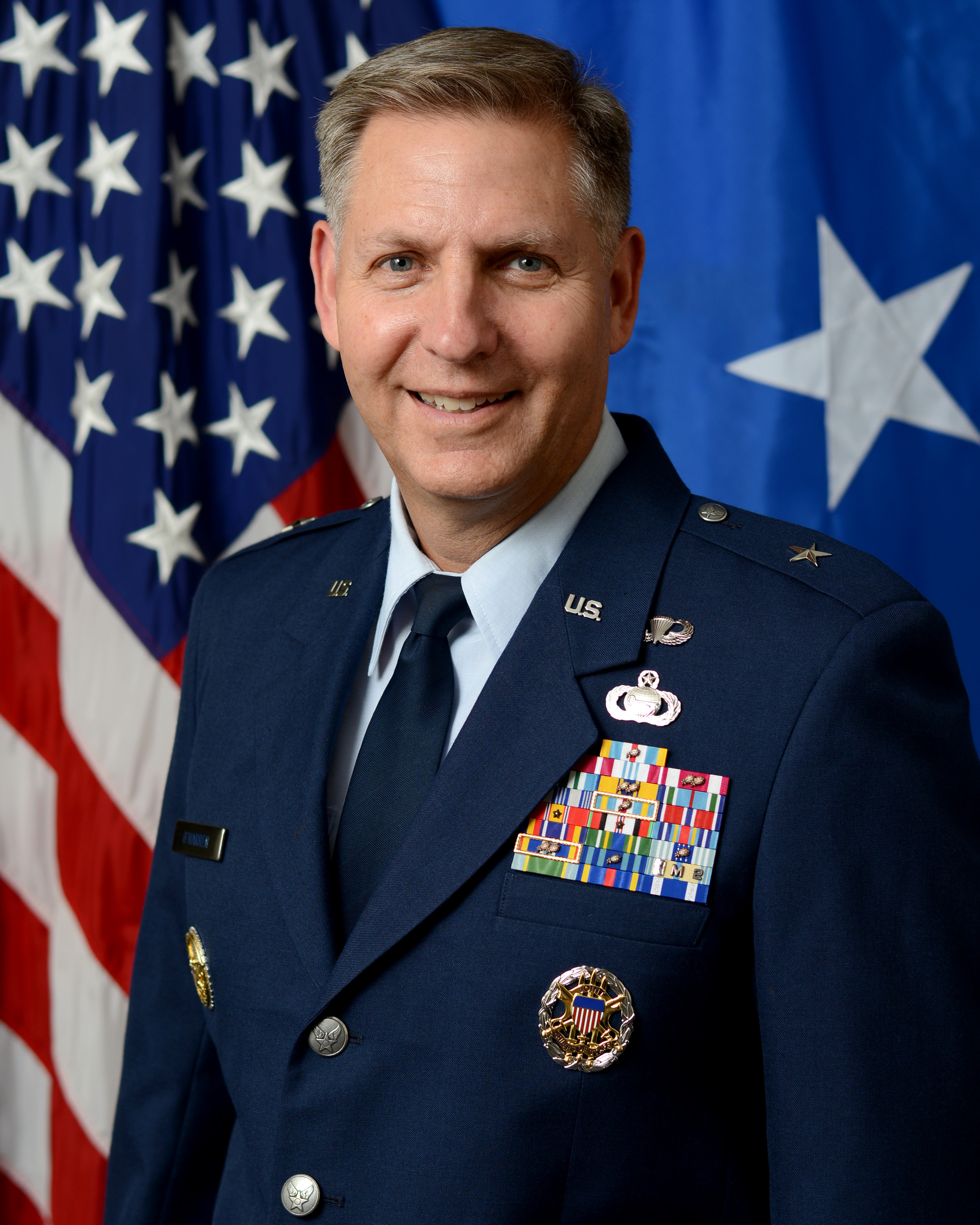
Brig. Gen. Shannon O’Harren is the Deputy Director for Intelligence, Surveillance and Reconnaissance Operations on the Joint Staff. As DDISRO, he provides recommendations to the Secretary of Defense and Chairman of the Joint Chiefs of Staff for ISR asset allocation and authorities. He optimizes risk mitigation strategies with services, combatant commanders, Office of the Secretary of Defense, and interagency partners while utilizing modeling and simulation techniques to inform ISR operational employment decisions.
Brig. Gen. O’Harren earned his commission in 1992 as a graduate of the ROTC program at the University of Colorado, Boulder. He is a career Intelligence Officer and served as a National Aeronautics and Space Administration Military Liaison Officer and aircrew member. He has since held numerous key staff positions at the unit, operational, combatant command, Joint Staff and Office of the Secretary of Defense levels. He has directed and commanded specialty joint and interagency teams and supported numerous overseas contingency operations.
Prior to his current position, he served simultaneously as Military Deputy of the Secretary of Defense Anomalous Health Incidents Cross Functional Team and Mobilization Assistant to the Commander, Sixteenth Air Force.
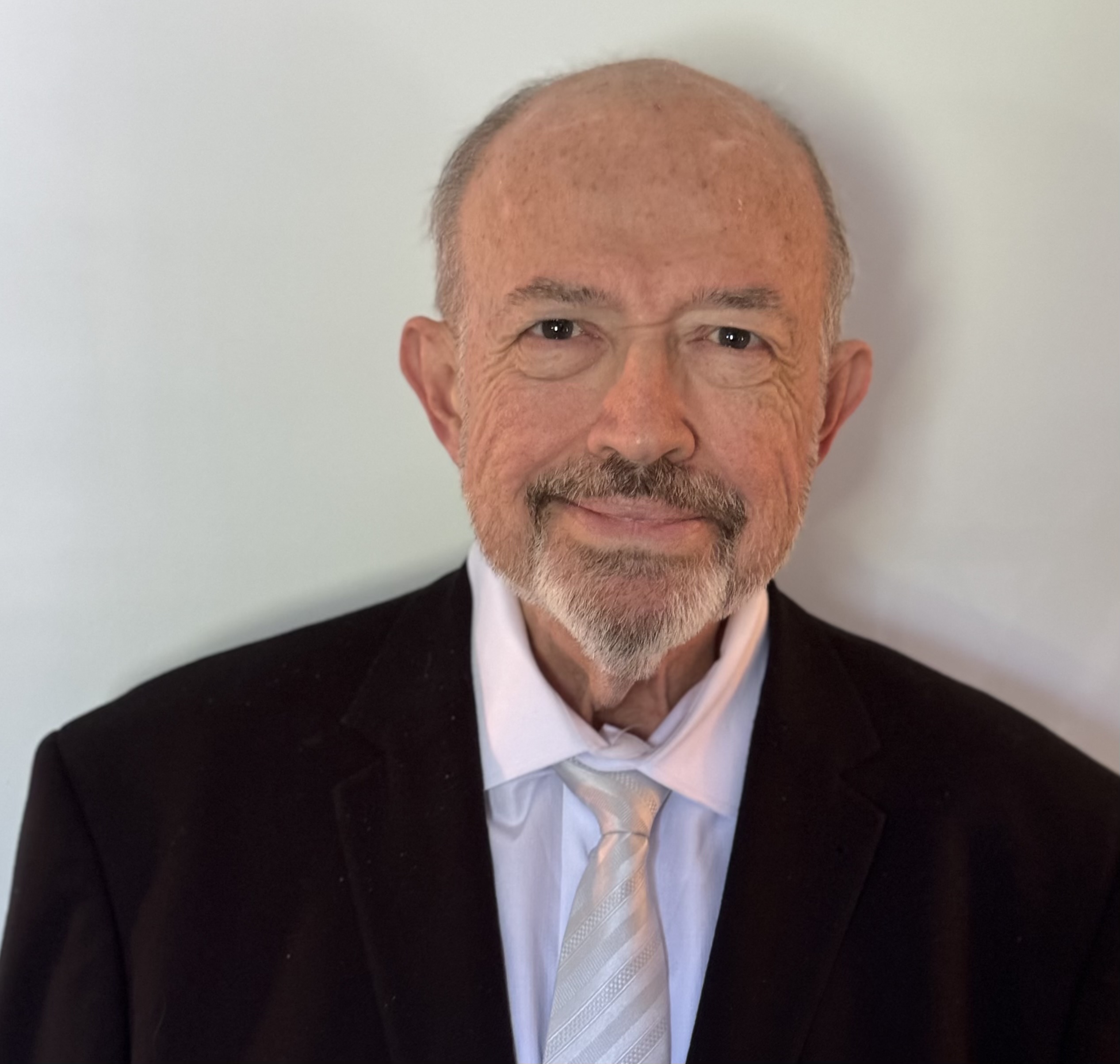
Mr Amoroso is the Director of Business Development for Information Dominance and Futures, Integration Solutions for Systems (IS4S). He is also the Managing Director of Amoroso and Associates, LLC. He is also the Director of Hanscom Operations for IS4S.
Mr. Amoroso has over 48 years of government and industry experience within the Command, Control, Communications, Computers, Intelligence, Surveillance, and Reconnaissance (C4ISR), information operations and electronic warfare communities, where he has spearheaded new initiatives and directed the procurement of Air Force, joint systems, special operations capabilities, counter-narcotics centers, coalition, command and control networks, aerial ground surveillance systems and the rapid acquisition of critical technologies. In his current and past positions he has had government and corporate responsibility for the planning, identification and execution of programs within the C4ISR area. He has held government leadership positions up to the system program office and division level. Mr. Amoroso has also represented corporate organizations to senior government and industry.
Focus areas including the U.S. Air Force, the U.S. Intelligence Community, Targeting & Geospatial Intelligence, Commercial Intelligence, Battle Management, Aerial Ground Surveillance Systems, Battle Control Systems, International C4ISR programs, and Homeland Security (HLS). Mr. Amoroso has an extensive operational background and has worked at all levels of intelligence from collection to applications. He has had extensive experience and has led efforts in the areas of collection management and operations; indications and warning analysis at SECDEF level; development and delivery of special operations capabilities; counter drug/counter terrorism development and delivery of capabilities; and liaison and training activities in the areas of joint and combined combat coordination/intelligence operations.
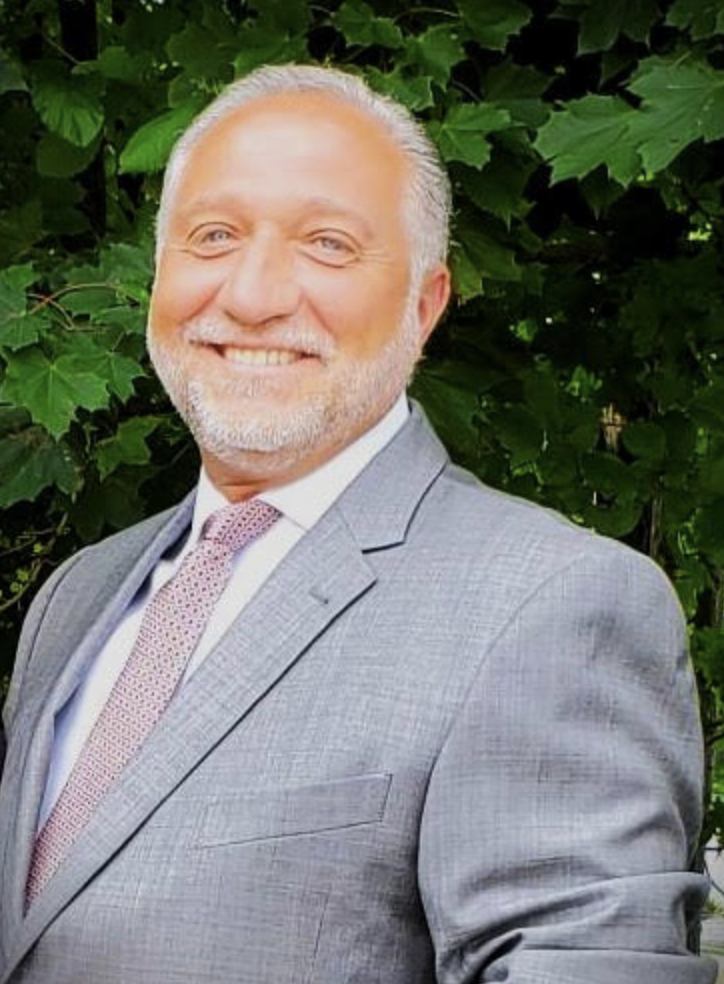
Anthony Lisuzzo brings industry and government together in the research, design, development and deployment of sophisticated electronic warfare and cyber offense/defense systems, intelligence, information operations, navigation, communication, command and control systems. He currently serves as President/CEO of Ironwave Technologies LLC designing, developing and manufacturing sensitive RF components and sub-systems for large domestic and international defense OEM’s for application into EW, Radar and communication systems.
Preceding, he served as Vice President and General Manager for East Coast Operations for Shipcom Federal Solutions (SFS), LLC., providing mini ERP and tracking systems and also a recent Silicon Valley Cyber startup company Color Token, providing zero-trust and enterprise micro-segmentation capabilities. Prio, he served as a Senior Vice President Joint Research and Development (JRAD) Inc. Responsible for establishing the Communication, Command and Control, Cyber, Intelligence, Surveillance and Reconnaissance Group. Previously, Anthony (Tony) was Vice-President of Defense, Intelligence, Strategic Innovation and Advanced Engineering with Booz Allen Hamilton, Anthony defined strategies and business plans for a $250M portfolio. After his departure from Federal service, Anthony was hired as Vice President and General manager L3 Communication Space and Navigation Division.
Formerly Anthony served as Senior Executive Service (SES) Member with the U.S. Army, Communication-Electronic Research, Development, Engineering Center, Director Intelligence and Information Warfare Directorate and on two blue ribbon panels for foreign military sales and technology exchange. Served as Chairman on numerous NATO Technology committees and was awarded NATO’s Science and technology R&D Award. Anthony is the recipient of numerous Defense Department awards, including the Presidential Meritorious Medal. He also holds the AOC Gold Medal Award and Life-time Achievement Award for his contributions to Electronic Warfare Mission.
Currently Anthony serves as Board Council Member of Maryland State Cyber Security Council, The Technology Advancement Center (TAC) and Board member for the Maryland Center for the Performing Arts. He is a former Advisory Board member for USMA West Point for 20 years.
Anthony earned a Master of Science from the New Jersey Institute of Technology and a Bachelor of Science from Pratt Institute in Brooklyn, NY.

Dr. Mark Maybury is the vice president, Commercialization, Technology & Strategic Innovation for Lockheed Martin, responsible for leading efforts to commercialize dual-use products and services from research and development (R&D) to accelerate growth in strategic commercial and defense sectors. He works with Lockheed Martin’s business areas and functions, Corporate Technology Office, LM Ventures, LMEvolve, FEASIC and AstrisAI Boards to strengthen commercial partnerships and licensing and to explore innovative business models that accelerate and scale new products and services in core and near adjacent markets.
Previously, Dr. Maybury was the first chief technology officer for Stanley Black & Decker, growing $1B in annual new product revenue from R&D. He served on the STANLEY Ventures Board, as executive champion for STANLEY X which incubated 7 startups, and as Executive Sponsor of STANLEY Techstars, accelerating 40 disruptive companies targeting VC and PE investment.
Dr. Maybury’s previous roles include Chief Scientist of the U.S. Air Force, Chief Technology and Chief Security Officer at MITRE and Director of the National Cybersecurity FFRDC. He guided spinning out 5 commercial technologies/startups as MITRE CTO. Dr. Maybury serves as a special government employee for the Defense Science Board providing strategy and technology advice to the Office of the Secretary of Defense. He serves on several commercial boards governing innovation and growth including ISI, Halo.Energy, and Nano surfaces. His past board service includes READY Robotics, Object Management Group, Air Force Scientific Advisory Board, Intelligence Science Board and Homeland Security S&T Advisory Committee.
Dr. Maybury is a Fellow of both the Institute of Electrical and Electronics Engineers (IEEE) and the Association for the Advancement of Artificial Intelligence. He received his BA in mathematics from College of the Holy Cross and MBA from Rensselaer Polytechnic Institute. He also holds a Master of Philosophy in Computer Speech and Language Processing and Ph.D. in Generative AI, both from the University of Cambridge, United Kingdom.
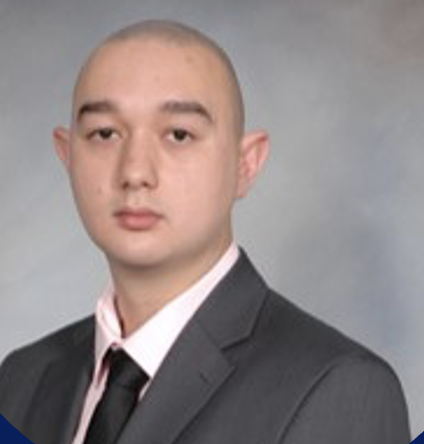
Michael Buttram is an Engineer and Project Manager at ISL, specializing in RF digital engineering and
hardware-in-the-loop (HWIL) testing. His work focuses on developing and
applying electromagnetic environment modeling and simulation software to
support training, mission planning, and real-world test integration. His
expertise includes software engineering, digital signal processing, and FPGA
design.
He holds a B.S. in Computer
Engineering from the University of Cincinnati.
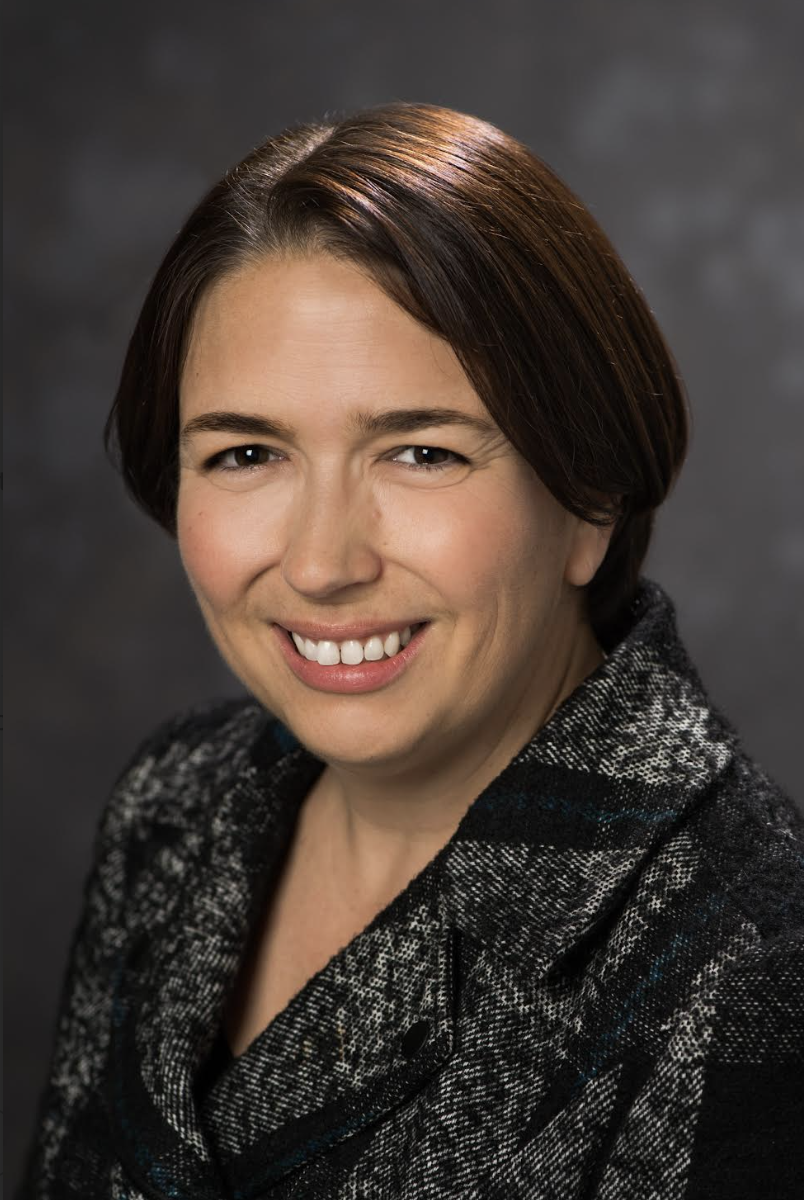
Dr. Katherine A. Rink is the division head of the Air, Missile and Maritime Defense Technology Division at the Massachusetts Institute of Technology (MIT) Lincoln Laboratory, which develops and assesses
new technologies and integrated systems for defense against ballistic missiles, cruise missiles, and air vehicles in tactical, regional, and homeland defense applications. Dr. Rink’s experience includes numerous leadership roles at MIT Lincoln Laboratory, developing and integrating advanced air and missile defense capabilities across the Department of Defense and the Services, with particular emphasis on developing new technologies for the U.S. Navy to address the advanced missile threat.
Dr. Rink joined MIT Lincoln Laboratory in 1999 as a member of the technical staff in the Systems Engineering and Analysis Group, where she worked on many technical aspects of the then-emerging
Aegis ballistic missile defense system, including systems analysis, tracking, and discrimination, prototyping, and flight test analysis. She led the laboratory’s Aegis ballistic missile defense program and
later led the development of advanced air and missile defense capabilities and electronic warfare prototypes for the U.S. Navy.
Dr. Rink is a member of the Naval Studies Board. She is an AIAA Fellow and a member of IEEE, SWE, Tau Beta Pi, and Phi Beta Kappa. She currently serves on the External Advisory Board for the electrical and systems engineering department for Washington University in St. Louis.
Dr. Rink received a B.S. in systems science and mathematics, a B.A. in mathematics and German, and an M.S. and D.Sc. in systems science and mathematics, all from Washington University in St. Louis, with an
additional M.S. in operations research from Columbia University.
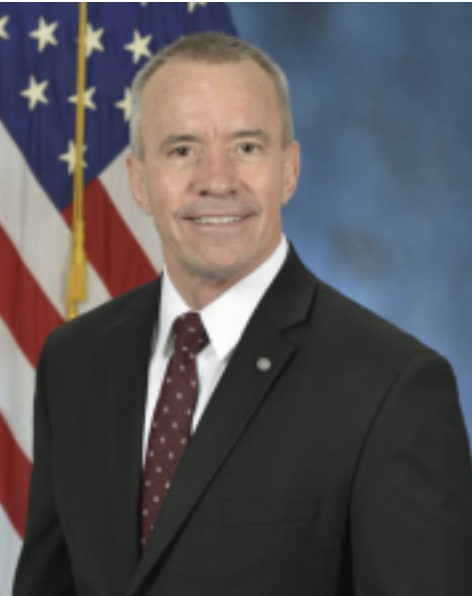
Mr. Christopher Dowd is Technical Director for the Air Force Program
Executive Officer for Nuclear Command, Control and Communications (NC3), executing a $13.9 billion portfolio, and Director of Engineering for the NC3 Integration Directorate, Air Force Nuclear Weapons Center, Hanscom Air Force Base, Massachusetts.
Mr. Dowd earned his commission from the U.S. Naval Academy with a Bachelor of Science degree in Electrical Engineering. He subsequently completed the rigors of Nuclear Power School, Nuclear Prototype Training, and was an honors graduate of Submarine Officer School. He served consecutive Division Officer tours on a fast attack nuclear submarine while earning his Submarine Gold Dolphins, followed by Department Head tours as Weapons Officer, and Chief Engineer. Prior to leaving active duty to pursue a civilian career, Mr. Dowd spent three years as engineering department head for a Deep Submergence Vehicle. He directed six agencies through the design, installation, and testing of over 120 equipment modifications during a 30-month overhaul, and earned his Deep Submergence Insignia and Lead Pilot designation.
Before joining the Civil Service, Mr. Dowd spent four years as Vice President of Business Development for an Information Technology firm which served the complex needs of businesses consolidating voice and data networks, network infrastructure analyses, cyber-security, and data center design and installation.
Mr. Dowd began his Civil Service Career in 2009 serving as 639th Electronic Support Squadron Chief Engineer, responsible for engineering oversight of five NC3 acquisition programs totaling over $5B in the FYDP. He was subsequently promoted to NC3 Branch Chief Engineer under the Space, Aerial and Nuclear Networks Division of the Command, Control, Communications, Intelligence and Networks (C3I&N) Directorate, while concurrently serving as Chief Engineer for Global ASNT, a new ACAT II protected SATCOM terminal program. In late 2015, Mr. Dowd was by-name selected to act as Director of Engineering for the CSAF-directed establishment of the NC3 Integration Directorate, was subsequently competitively selected for the position, while serving a dual role as Director of Engineering for the Air Force Program Executive Officer for NC3.
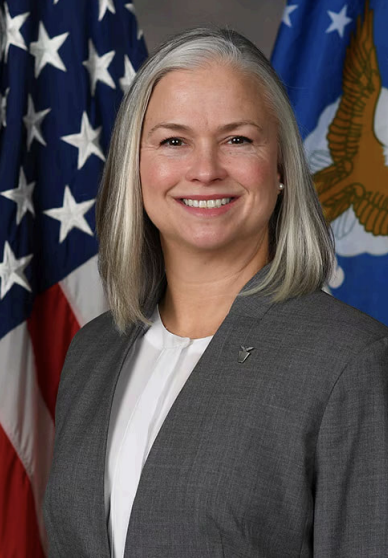
Lea T. Kirkwood, a member of the senior executive service, is the Program Executive Officer, Electronic Systems, Air Force Lifecycle Management Center, Hanscom Air Force Base, Massachusetts. She leads more than 1,800 Airmen, government civilians, and support contractors to execute an $11.3 billion active year portfolio of Acquisition Categories, non-ACAT, technology transition and software programs, and Foreign Military Sales cases. She provides direction and oversight on acquisition policy, strategy development, and program management in support of aerospace management, sensors, force protection, electronic warfare, position, navigating, timing, and command and control capabilities.
Ms. Kirkwood served 29 years as an active-duty Air Force officer. As an acquisition program manager, she managed space, command and control, mission planning, automatic test systems and early warning and control programs for United States and NATO operations, as well as foreign military sales. She led international relations at the Pentagon, in Hungary and United Kingdom. She commanded the 422nd Air Base Squadron, Royal Air Force Croughton, United Kingdom, and Served as Deputy Commander, 78th Mission Support Group, Kandahar Air Field, Afghanistan; and Vice Commander 72nd Air Base Wing, Tinker AFB, Oklahoma. She deployed in support of operations Enduring Freedom and Freedom's Sentinel, and for the NATO-led Resolute Support Mission.
Prior to her current position, she served as Program Executive Officer and Director for the Agile Combat Support Directorate, Air Force Lifecycle Management Center, Wright-Patterson AFB, Ohio. She led over 1,600 military and civilian personnel and was responsible for executing $8.2 billion annually to provide materiel solutions and acquisition lifecycle management for simulators, support equiptment and vehicles, electronic warfare, combat avionics, human systems, automatic test systems, and metrology and calibration to meet Air Force operational needs.
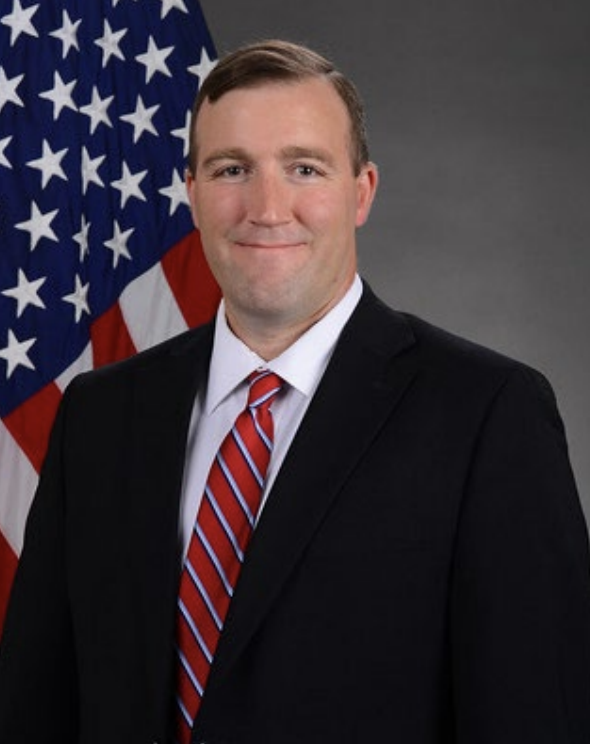
Mr. David Adamek is the Director of Engineering for the Cyber & Networks Directorate, Air Force Life Cycle Management Center, Hanscom Air Force Base, Massachusetts. Mr. Adamek oversees an engineering workforce of over 400 Airmen across a $21 billion portfolio that includes developing, producing, deploying, and sustaining Department of the Air Force aerial networks, enterprise information technology and cyber infrastructure, cybersecurity and cryptologic systems, software development factories and platforms, combat communications and special programs. These systems enable reliable
connectivity for more than 600,000 users at the point of mission need.
Prior to joining the Cyber & Networks Directorate, he served as Chief Engineer of the Force Protection Division, where he delivered Electronic Security Systems to installations across the globe and addressed emerging Small-Unmanned Aerial System (s-UAS) threats. During his 14-year tenure with the Air Force, Mr. Adamek also held leadership roles on the Survivable Airborne Operations Center (SAOC) program and on various Aerial Networking programs. Prior to joining the Air Force team at Hanscom, Mr. Adamek was a Systems Engineer and Deputy Branch Chief with the Missile Defense Agency working on the Ground Based Midcourse Defense (GMD) program as well as numerous radar systems as a member of the Sensors Directorate.
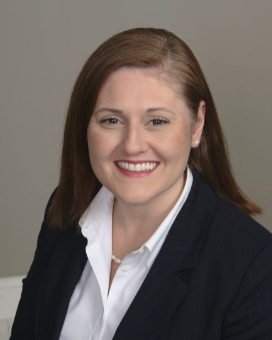
Alexis M. Presti-Simpson leads the staff and technical program of the Boston office of the Software Engineering Institute of Carnegie Mellon University to provide support to Hanscom Air Force Base, DoD and civil government organizations, and industry in the Boston area and the northeastern U.S. Presti-Simpson has executive and operational engagement for the SEI portfolio supporting Software R&D for the U.S. Air Force Program Executive Offices for PEO Electronic Systems, PEO Cyber and Networks, PEO Nuclear Command and Control, PEO Command, Control, Communications and Battle Management, Cyber Resiliency of Weapons Systems, Defense Innovation Unit and MIT AI Accelerator.
Presti-Simpson has more than 25 years of experience in the DoD and defense industry. After commissioning as an active-duty U.S. Air Force Intelligence Officer, Presti-Simpson also continued to serve as an Air Force Government Civilian and Reservist. She has held numerous active duty, tactical, joint operational, strategic, national level intelligence assignments in mobility, humint, disruptive technology, research and development for the Air Force. Presti-Simpson also currently serves as a Lieutenant Colonel in the Air Force Reserve, assigned to the Deputy Chief of Staff for Intelligence, Surveillance, Reconnaissance and Cyber Effects Operations, Air Staff, HAF/A26, at the Pentagon.
Presti-Simpson currently serves as a University Fellow on the Norwich University Board of Fellows, visiting committee for Sciences and Mathematics. In 2015, Presti-Simpson received the Norwich University Alumni Directors Award for her service as President of the Norwich Alumni Board of Directors. She also serves on the Executive Committee as Secretary of the AFCEA Lexington Concord Chapter and previously served as an appointed official on the Acton-Boxborough Cultural Council.
Presti-Simpson earned her BA from Norwich University and MA from Harvard University. She is also a graduate of the U.S. Air Force Air War College, Air Command and Staff College, Squadron Officer School, and Intelligence Officer School. She is a graduate of the Yale School of Management - Executive Women’s Leadership Program, The MIT Sloan School of Management AI for Business Program and the Software Engineering Institute Agile for Executives Course.

Ms. Debra Zides
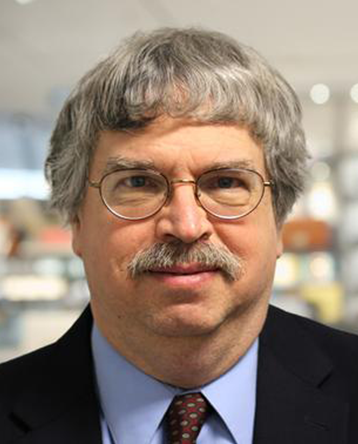
Dr. Mark Sherman is the Director of the Cybersecurity Foundations directorate in the CERT Division of the Carnegie Mellon University Software Engineering Institute (CMU SEI).
Sherman leads a diverse team of researchers and engineers on projects that focus on foundational research on the life cycle for building secure software, data-driven analysis of cybersecurity, cybersecurity of quantum computers, large language models and applications, cybersecurity for and enabled by machine learning applications and detecting fake media. His team applies this research in support of the modernization of the nuclear enterprise and next generation weapon systems.
Sherman was at IBM and various startups, working on mobile systems, integrated hardware-software appliances, transaction processing, languages and compilers, virtualization, network protocols and databases.
Sherman received his undergraduate degrees from MIT and a PhD in Computer Science from CMU.
Sherman has authored more than 100 articles and five books on various topics in computer science.

Priya Kohler is the Senior Director, Space Systems Growth in the Space Systems Division in the Aerospace Business Area of the Defense Systems Sector. She is focused on the growth for building end-to-end space systems at Leidos and on growing the customer base, business pipeline and partnerships across space sensing and civil space businesses. Ms. Kohler has held roles of increasing responsibility at Leidos to include serving as a Program Portfolio Director, enabling growth in Multi-Domain Operations, Space Mission Orchestration and Command & Control (C2) mission-based programs for both ground and space software platforms.
Most recently served as the Director of Strategy & Space Software Growth for the Decision Advantage business area of Leidos National Security Sector. In this role, she drove growth in the multi-domain operations & space software market to support Leidos’ vision to become the leading provider of space mission software across the Department of Defense. Prior to joining Leidos, Kohler worked at Northrop Grumman for over a decade growing and developing space systems, including building and executing space sensor programs and is a graduate of their Future Technical Leaders program. Priya Kohler has a master’s and bachelor’s degree in computer science from the University of Cincinnati with a concentration in data science & secure data engineering. She also holds an executive certificate from Wharton School at the University of Pennsylvania.

Dan Crouch is the Vice President for Integrated Solutions for Systems
(IS4S) headquartered in Huntsville, Alabama where he is the Chief Innovation Officer for Space Systems. His primary role under IS4S is supporting numerous United States Air Force/Space Force programs out of the Albuquerque, New Mexico Space Systems office. Mr. Crouch is also a senior advisor to NewSpace Nexus supporting their Expert Network to educate and enable government and industry partnerships across the Space System Enterprise. In addition, he is also the Legislative Liaison for New Mexico’s Professional Aerospace Contractor Association (PACA) supporting Aerospace/Space communities across New Mexico and is Senior Advisor to the Mechanical Engineering Department chair at the University of New Mexico. Prior to this role, Mr. Crouch retired from the Space Force as a GS-15 after 35 years of dedicated support to the nation.
His last duty in the Space Force was as the Deputy Director, Innovation and Prototyping Delta, Space Systems Command at Kirtland AFB, New Mexico. He was responsible for Organizing, Training, and Equipping a combined team of 740+ military, government civilians, and contractors at four geographically separated units and managed a $3.8B portfolio to rapidly transition and deliver warfighting space concepts, technologies, and capabilities to the Space Force and mission partners across the National Security Space community. The Delta executes test and experimentation, prototyping, demonstrations, and operations of innovative space systems and technology for the Space Systems Center.
Prior to his final assignment, Mr. Crouch was the Division Chief and Senior Materiel Leader, Prototype Operations Division at Kirtland AFB, New Mexico where he was responsible for leading a team of over 330 military, civilian and contractors executing a $2.5B portfolio under the Research and Development Space and Missile Operations (RDSMO) Program. Mr. Crouch was responsible for the design, development, test and evaluation, implementation, and operations of a Multi-Mission Satellite Operations Center (MMSOC) Ground System Enterprise. Under Mr. Crouch’s leadership, the RDSMO program enabled the Air Force to rapidly advance and deliver complex ground systems, space vehicles, and Tactics, Technics and Procedures to meet United States Space Force warfighting initiatives.

Dr. Shawana Johnson, GISP, is a subject matter expert in commercial GIS and Geospatial Intelligence in leading edge technology for space, air and land sensors, 5G and Sub 6 communications technology with applied science expertise in Global Food Security, Water Resources, Energy and National Security.
She was awarded a certificate of completion for the Senior Managers in Government Program, 8/2019, John F. Kennedy School of Government at Harvard University, Executive Education and obtained her Doctorate Degree in Management (focused on Economics and Technology Transfer) from the Weatherhead School of Business from Case Western Reserve University, Cleveland, OH.

Capt. Daniel Brewster
Scott C. Hardiman, a member of the Senior Executive Service, is the Air Force Program Executive Officer (PEO) for Nuclear Command, Control and Communications (NC3), and the Director of the NC3 Integration Directorate, Air Force Nuclear Weapons Center, Hanscom Air Force Base, Massachusetts. Leading one of the AFNWC execution directorates, he is responsible for integration of the Air Force's NC3 Weapon System and for leading more than 400 Airmen, government civilians and support contractors. Additionally, he directs the acquisition execution of a $13.9 billion portfolio of Acquisition Categories (ACAT), non-ACAT, and sustainment programs. As the PEO for NC3, he reports directly to the Service Acquisition Executive and is the milestone decision authority for delegated ACAT II and all ACAT III programs in the NC3 portfolio.
Mr. Hardiman entered the Air Force in 1984 after graduating from the Air Force Reserve Officer Training Corps at the University of Southern California, Los Angeles, as a distinguished graduate with a regular commission. He began his military career as a Propulsion Systems Test Manager and F110-GE-129 Engine Production Program Manager, Aeronautical Systems Division, Wright-Patterson AFB, Ohio.
During his 22-year military career, Mr. Hardiman served in a number of program management, logistics, and higher headquarters positions. Early in his career, he managed programs that included test and production of advanced jet engines for F-15 and F-16 fighter aircraft and advanced radar systems, communications and radar facilities for the U.S.-Canadian North Warning System. In his final two military assignments, he served as the Deputy System Program Director for the F-117A Nighthawk stealth fighter program and the Materiel Squadron Commander for B-52H bomber modernization.
He began his civilian government service in 2006 as Deputy Director of the 851st Electronic Systems Group, Electronic Systems Center, Hanscom AFB, where he was responsible for a $5 billion program providing next-generation airborne sensor and battle management capabilities. He then served in a number of positions, including as a research fellow at the RAND Corporation, Santa Monica, California; Deputy Director, Electronic Systems Center’s Capabilities Integration Directorate; and Chief, Space and Nuclear Networks Division.
From 2016 to 2022, Mr. Hardiman was both the Deputy Director, NC3 Integration Directorate, Air Force Nuclear Weapons Center, and the Air Force Deputy PEO for NC3. He assumed his current responsibilities in January 2022.

Dr. Beverly A. Stark-Kublin
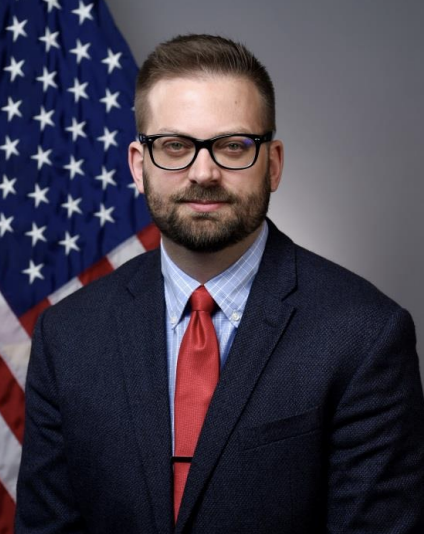
Mr. Michels currently serves as Warfighter Integration Cell
(WIC) Director for the Space Development Agency. SDA is recognized as the Department of Defense's constructive disruptor for space acquisition. SDA will quickly deliver much needed space-based capabilities to the joint warfighter to support terrestrial missions through development, fielding, and operation of the Proliferated Warfighter Space Architecture (PWSA). The WIC is the lead interface between the Acquisition of the PWSA and the operational force. Prior to this assignment, he held several technology leadership and engineering roles both in government and private industry.
Most recently, Mr. Michels served as the Chief Scientist at Northrop Grumman Xetron, leading mission architecture development and IRAD decisions for the hardware side of the Operating Unit (2019-2022). Before that, he served as Science Advisor to the Commander of US Fleet Cyber Command (2018 - 2019). Mr. Michels also served as an Electronics Engineer in the Naval Center for Space Technology at the Naval Research Laboratory (NRL) in Washington DC for six years (2012–2018), focusing on technologies that enable tactical use of national and commercial space assets. He held several roles during this time, including Principal Investigator of the Ground Antenna System - Ku/Ka Test (GAS Kuka), Radiant Satellite Integrated Direct Downlink Study (SIDDL), AMDAS 2020 Study, and the Race to Alaska Vessel Imaging Test (RAVIT). He also served as Lead Hardware Engineer and Chief Systems Engineer for the Coalition Tactical Awareness and Response (CTAR) Joint Technology Capabilities Demonstration (JCTD). CTAR demonstrated the utility of commercial space based sensors to locate non-emitting, “dark” vessels in operational timelines. Efforts resulted in the transition of an operational prototype to the DHS Air and Marine Operations Center. This was formally recognized by NRL with a Technology Transfer Award in August 2017.
Mr. Michels served as an enlisted member of the Navy as an Electronics Technician from 2000 – 2006. During this time he was stationed at Naval Station Rota Spain as an ASR-8 radar technician and on the USS Peleliu as the Combat Systems Electronics Supervisor. He received 2 Naval Achievement Medals during his service and deployed to the Persian Gulf in 2006 onboard the USS Peleliu in support of Operation Iraqi Freedom.
Mr. Michels graduated from the University of Cincinnati in 2011 with a Bachelor of Science in Electrical Engineering and in 2015 from Johns Hopkins University with a Master of Science in Electrical Engineering. He is a native of Florence, Kentucky.

Ryan Bone is the Lead Project Engineer for the Air Force Research Laboratory, Sensors Directorate, Spectrum Warfare Divisions (AFRL/RYW), Virtual Combat Laboratory (VCL). The mission of the lab is to assess new and existing Spectrum Warfare technologies in a forever changing and challenging battlespace. His role is to guide a dedicated team in the development and employment of new and existing MS&A methods at multiple domains based on real world operational requirements to perform assessments of cutting-edge technologies.
He holds a bachelor’s and master’s degree in electrical engineering from Wright State University in Dayton, Ohio, and a professional certification in Electromagnetic Warfare Technology from the Georgia
Institute of Technology.
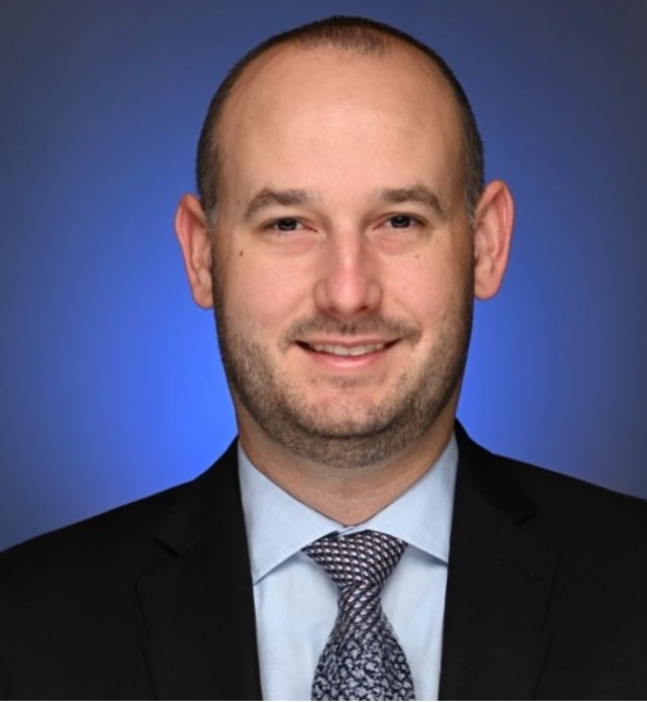
Jason Styslinger leads MITRE programs supporting the development and deployment of the Guam Defense System.
As the Weapons Systems Department Principal, he also oversees initiatives
advancing technologies and capabilities to support Integrated Air and Missile
Defense.
Previously he served as an Air Force operations research officer, leading operational test analysis, and
gaining firsthand experience aboard F-15 and F-16 aircraft, focusing on
tactics, techniques, and procedures (TTPs) and technologies for operations in
contested and degraded electronic environments.
Mr. Styslinger holds a BS from Auburn University, an MS in Industrial and Systems Engineering from New Mexico
State University and is a graduate of the Army Logistics University’s
Operations Research and Military Applications program.
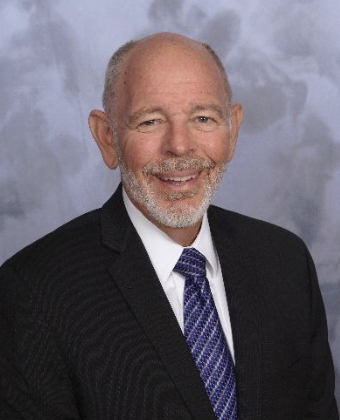
Mr. Dana A. Goward is President of the Resilient Navigation and Timing Foundation, a public benefit scientific and educational charity advocating for policies and systems to protect GPS/GNSS satellites, signals, and users. He has served at sea as a ship’s navigator, as a Coast Guard helicopter pilot, and as the maritime navigation authority for the United States.
He is the recipient of the Air Medal, the Institute of Navigation’s Hays Award for inspirational leadership, is a Fellow of the Royal Institute of Navigation, and received the Harrison Award from the International Association of Institutes of Navigation.
Mr. Goward has been a member of the U.S. President’s National Space-based Positioning, Navigation, and Timing Advisory Board since 2015.

Matt Hammond is an electrical engineer with over twenty-five years in wireless engineering testing, including satellite modem development. During much of his twenty years at Rohde & Schwarz, Matt developed and managed the North American wireless chipset strategies for Rohde & Schwarz and supported some of the largest wireless chipset companies around the world. Matt currently manages the North American satellite test strategy and initiatives for Rohde & Schwarz. As a result of working with some of the largest satellite networks and manufacturers, Matt intimately understands the challenges and nuances of testing satellite payloads, ground stations, and user terminals.
Bill Kardine is the Radar and EW Business Development Manager in North America at Rohde and Schwarz. Prior to that he was an Application Engineer focusing on Radar test and measurement solutions. In his current role he works closely with industry partners to provide the Aerospace and Defense market with test and measurement solutions closely aligned with end-user’s key measurement objectives. This role spans customer conversations in the Test & Evaluation community, Science & Technology community, and defense contractors of all different tiers.
Bill has a BE in Electrical Engineering & BS in Physics from the University of Delaware, and also has an MSEE in Electromagnetics from UCLA. He’s very excited to discuss EW topics as it relates to the space ecosystem.